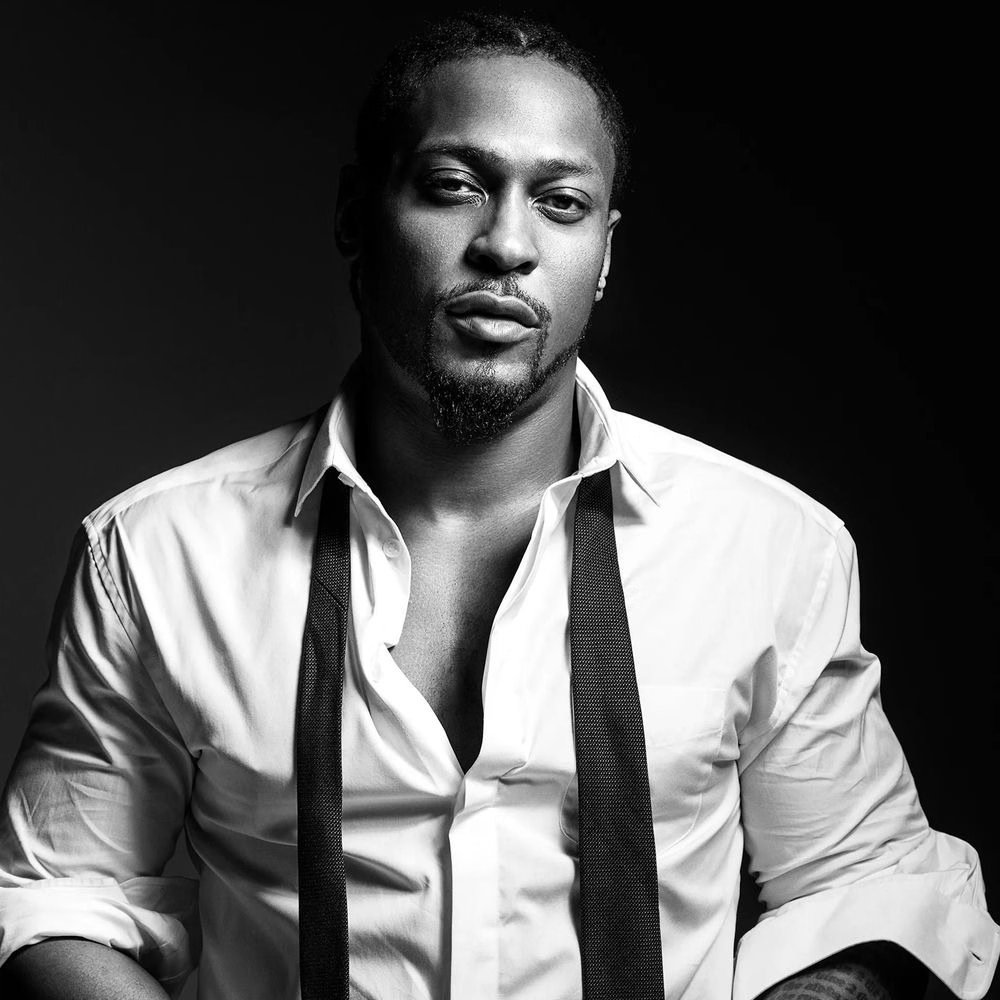
D'Angelo walked into the mid-90s R&B landscape -- all drum machines, all shiny surfaces, all machines pretending to be people -- and made Brown Sugar 0:30. An album that tasted like it sounded. Real horns.
Real bass. Real sweat coming off the groove. He was 21, a preacher's kid from Richmond, Virginia, who'd taught himself piano, guitar, and production in his bedroom, and he walked into Electric Lady 0:30 Studios with a band that played like they'd been together for years. The neo-soul revolution started with him looking uncomfortable in front of a microphone, shirt off in the Untitled video, and somehow being perfect anyway.
"Everything, everything, everything is okay / We could make love on a rainy day"
-- from When We Get By
Michael Eugene Archer grew up in the church -- his father was a pastor at the Zion Baptist Church in Richmond -- and the gospel never left him. It just became secular. He played organ on the family's gospel circuit, learned every chord progression in the book, and by 18 he was in New York, writing songs for others, smoking weed on park benches with future collaborators. The early-90s R&B machine didn't know what to do with a singer who could actually play, who wanted real drums and real mistakes and the sound of air moving through a room. Brown Sugar 0:30 sold two million copies anyway. He helped build a whole generation of artists who followed -- Erykah Badu, Maxwell, Jill Scott -- before he'd even made his second album.
Voodoo took five years to make and was worth every day. Questlove on drums, Pino Palladino on bass, Roy Hargrove on trumpet -- an album so deep in the pocket it practically lived underground. The grooves didn't announce themselves. They seeped in, slow and patient, the kind of funk that works on you over hours, not minutes. Untitled (How Does It Feel) became his signature -- four minutes of raw, unguarded soul that made him a reluctant sex symbol overnight. The women screamed, the cameras followed, and D'Angelo retreated. He'd been raised in a church that taught him to hide. Now the whole world wanted his body. He didn't know how to be looked at.
The decade and a half that followed was a disappearance. Addiction, rehab, car accidents, silence. He gained weight, grew a beard, stayed in Virginia. The rumors piled up -- he was done, he was broken, he'd burned out. But D'Angelo had been recording the whole time, in secret, with the Vanguard, a rotating cast of musicians who showed up at his house and played until the sun came up. Black Messiah dropped in December 2014 without warning -- no press, no build-up, just an album about Black life in America after Ferguson, after Trayvon, after a generation of young Black men killed by police. It sounded like a prayer for a world that needed one. Really Love. The Charade. He'd been gone 14 years, and he came back more necessary than he'd left.
He didn't release another album. The full-scale return never came. On October 14, 2025, D'Angelo died at 51. Three albums in 25 years -- Brown Sugar, Voodoo, Black Messiah -- and each one shifted the ground beneath R&B. He didn't make music for the industry. He made architecture. Every artist who's tried to put real instruments back in R&B is walking through a door D'Angelo left open.
D'Angelo was profiled in the documentary, Devil's Pie, in 2018.