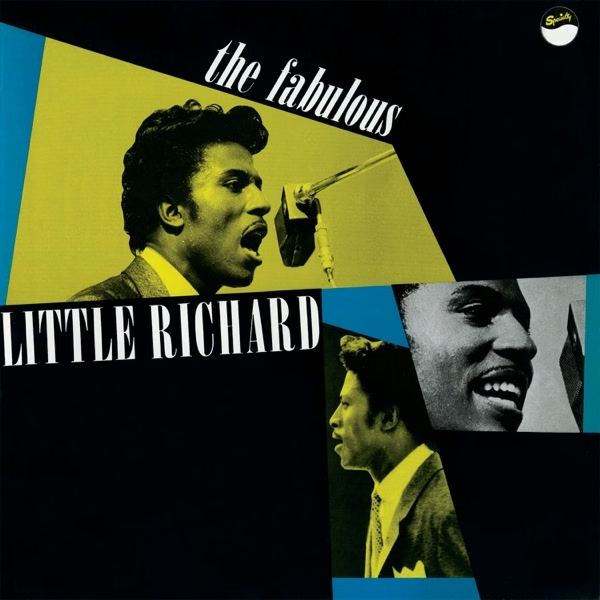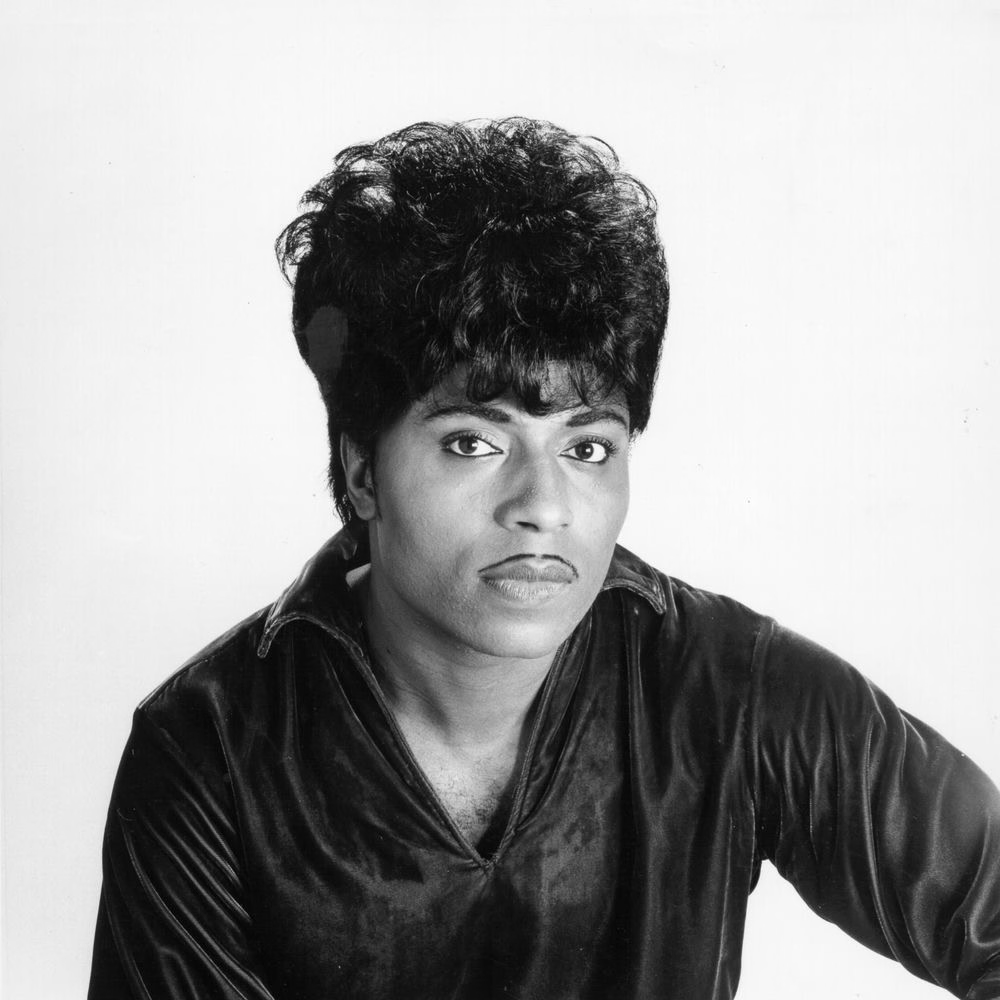
A man who made a sound so loud it broke the world in half. Little Richard -- hit a piano key and screamed "A-wop-bop-a-loo-bop-a-lop-bam-boom!" and rock and roll was never the same. He did not invent rock and roll alone.
But he gave it the energy that made it dangerous, the sexuality that made parents nervous, the pure noise that made teenagers lose their minds. Before him, the music was polite. After him, it was a riot.
The cost of that scream was a life of war within himself. Richard Penniman grew up in a religious home in Macon. His father threw him out for being effeminate. He fell in with the traveling minstrel and R&B circuit, playing piano for the Upsetters and learning how to work a crowd that would eat you alive if you bored them. His early records were standard jump blues -- fine but not special. Then at a demo session in New Orleans in 1955, he cut "Tutti Frutti." The lyrics were too raw for radio. Dorothy LaBostrie cleaned them up in fifteen minutes while the band waited. The song became a hit. Richard became a star overnight. The church called him a sinner for playing the devil's music. The world called him a genius. He could not believe both. That split never healed.
"Tutti Frutti" is the peak -- two minutes and twenty-five seconds of pure detonation. The piano is hammered into submission. The voice is at full throttle from the first syllable. The rhythm section barely keeps up.

Richard followed it with "Lucille," "Good Golly Miss Molly," "Long Tall Sally" -- each one a high-wire act of controlled chaos. He quit rock and roll in 1957 to preach the gospel. He came back. He quit again. The back-and-forth cost him the sustained run he could have had. But the records he made in those short years between 1955 and 1957 rewired popular music at the DNA level. Everything that came after -- from the Beatles to Prince to hip-hop's obsession with the beat -- traces back to that sound.
Little Richard cost himself a steady career. He paid for his contradictions in public view, never able to reconcile the sacred and the profane that both lived in him equally. But every rock and roll singer who ever screamed into a microphone, every piano player who ever stood up at the keys, every performer who ever made the crowd lose its mind -- they are walking in his footprint. The Beatles opened for him in Hamburg. James Brown stole his stage moves. Prince inherited his androgynous swagger and turned it into a whole aesthetic. The bam-boom is still echoing through every arena on earth.