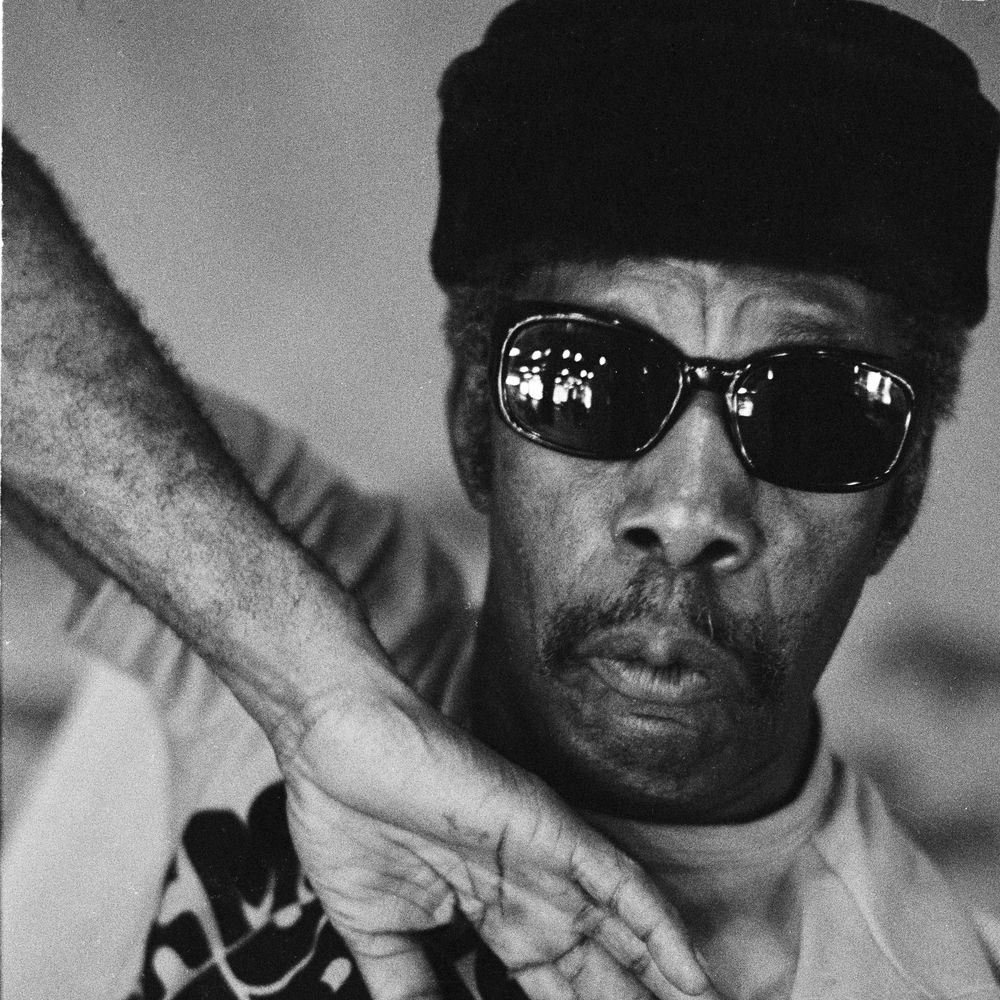
Professor Longhair played piano like nobody else -- Cuban rumba rhythms filtered through New Orleans streets, his left hand rolling a habanera pattern while his right hand picked out boogie-woogie runs that shouldn't have worked together but did. Tipitina is the sound of Mardi Gras in one song. Every New Orleans pianist who came after -- Dr.
John, Allen Toussaint, James Booker -- played in his shadow.
Henry Roeland Byrd. Fess. He was a tap dancer and a gambler before he was a musician, and his piano style reflected it -- percussive, rhythmic, built for dancing. He recorded for Atlantic in the early 1950s and then faded into obscurity, working as a janitor and a card shark, until the New Orleans Jazz & Heritage Festival brought him back in the 1970s.
He recorded Crawfish Fiesta in the last year of his life -- an album that captured the joy and the weirdness and the rhythmic genius of a man who'd waited 30 years for the world to catch up. He died in his sleep at 61. Tipitina is still played at every Mardi Gras. The spirit of Fess is still in the room.
Professor Longhair played rumba rhythms through New Orleans and invented a piano style nobody else could replicate. Tipitina is Mardi Gras in one song. Dr. John, Allen Toussaint, James Booker -- they all played in his shadow.