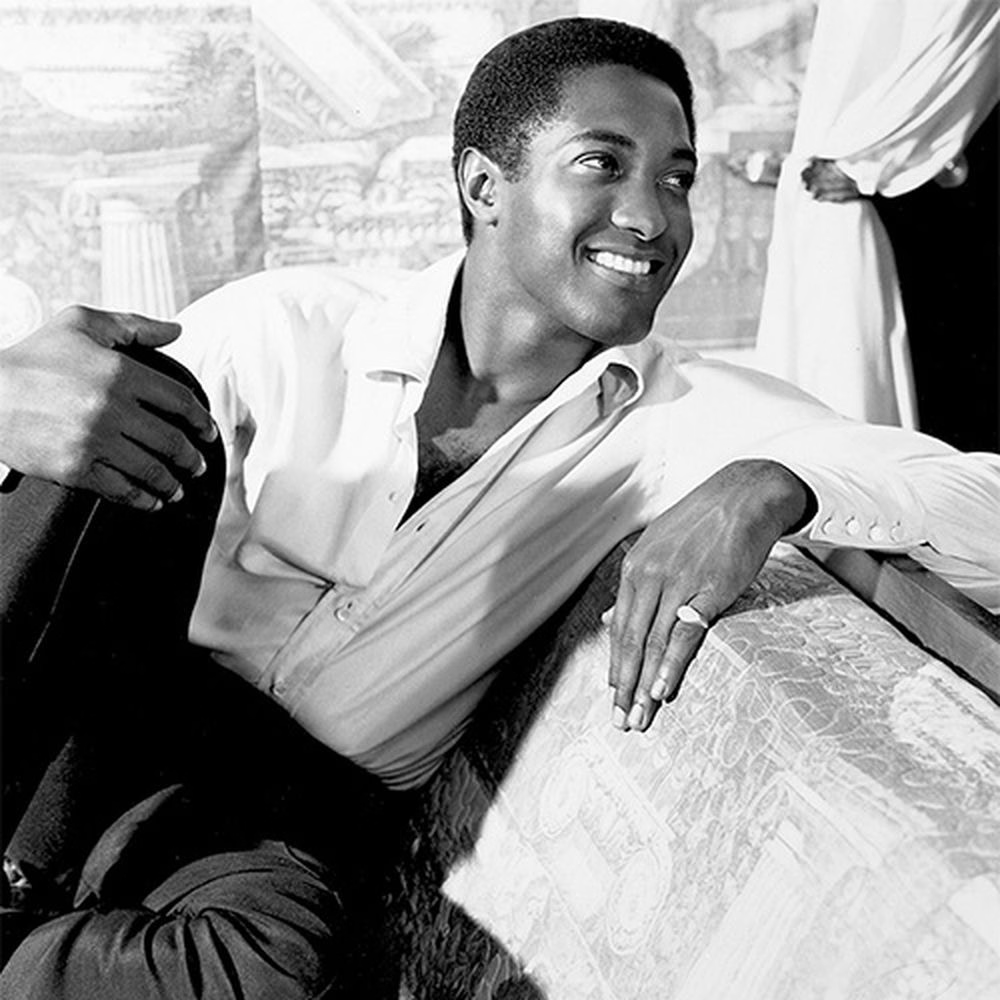
He was the most beautiful singer gospel had ever produced, and he walked away from it. The Soul Stirrers were the biggest gospel group in America, and Sam Cooke was their star -- a voice so pure and effortless that women fainted in the aisles. Then in 1957, at 26, he crossed over.
You Send Me 0:30, released under the name Dale Cook so the gospel fans wouldn't know, hit number one on both the r&b and pop charts. The church felt betrayed. Sam didn't care. He was building something bigger.
The pop hits came fast: Chain Gang 0:30, Twistin' the Night Away, Bring It On Home to Me 0:30, Another Saturday Night 0:30. He was the first Black artist to start his own record label (SAR Records) and his own publishing company, controlling his masters and his money in an industry that had never let a Black artist hold the pen. He was handsome, charismatic, a matinee idol in a sharkskin suit who could walk into any room in America and own it. And then in 1963, he heard Bob Dylan's Blowin' in the Wind and thought: why hasn't one of us written that?
A Change Is Gonna Come 0:30 was his answer. A sweeping, orchestral ballad about the Civil Rights Movement -- "I was born by the river, in a little tent, and just like the river I've been running ever since" -- that was more honest about the pain of being Black in America than anything on the radio in 1964. The arrangement, by Rene Hall, was Hollywood strings meeting the church. Cooke performed it exactly once on television, on The Tonight Show, and the recording was released as a single after his death.
It became the anthem of the movement. It's still the anthem.
He died in December 1964 at the Hacienda Motel in Los Angeles, shot three times by the motel manager, Bertha Franklin. The official story was that Cooke had assaulted a young woman, fled half-naked, and attacked Franklin, who shot him in self-defense. The details never added up. The woman was a prostitute. Cooke's money was missing. Franklin passed a polygraph but collected a settlement. The coroner ruled it justifiable homicide. Sam Cooke was 33. The man who sang "a change is gonna come" didn't live to see the change arrive. But he called it.
Live at the Harlem Square Club, recorded in January 1963 but not released until 1985, is the real Sam Cooke -- raw, sweaty, playing to a Black Miami crowd who'd come to dance, not sit politely. He screamed. He growled. He made the women in the front row lose their minds. It sounds nothing like the polished pop records. It sounds like the truth. RCA shelved it because it was too Black, too rough, too real for white audiences. They were wrong. It's the greatest live soul album ever recorded.