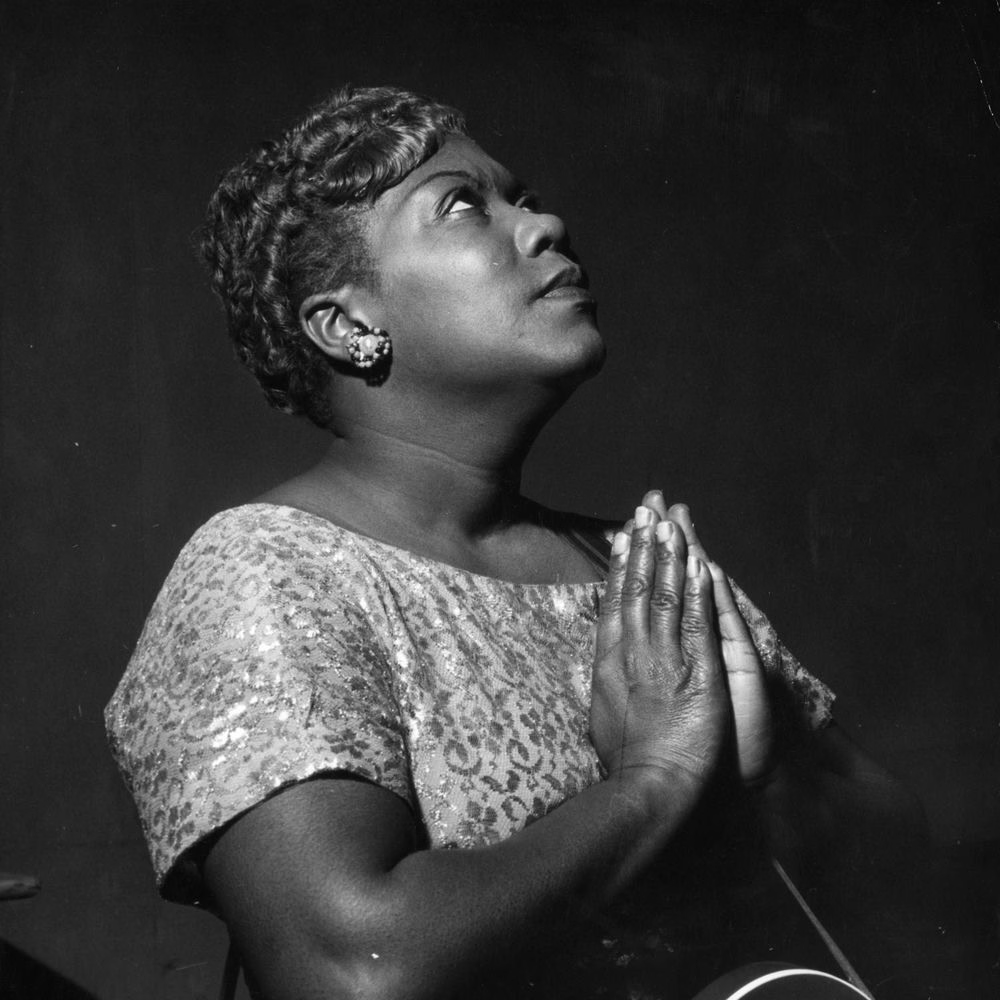
Before there was a king of rock and roll, there was a queen with a Gibson SG and a voice that could knock the paint off a church wall. Sister Rosetta Tharpe strapped on her electric guitar, stepped up to the microphone, and fused gospel ecstasy with blues swagger in a mixture that had never been poured before. She played the guitar like she was wrestling it for the right to testify, bending strings and cutting through the mix with a tone that still sounds futuristic.
The entire history of rock music traces back to that moment in Cotton Plant, Arkansas, and the debt has never been fully paid. The queen was there before the king even knew the throne existed.
Born in 1915, Tharpe was raised in the Pentecostal church and started performing gospel as a child, traveling the revival circuit with her evangelist mother. By the 1930s she had landed in Chicago, where she began recording for Decca Records -- a gospel artist on a secular label, singing about Jesus with a jazz swing that made the deacons nervous and the crowds ecstatic. She toured with Lucky Millinder's orchestra, playing electric guitar through amplifiers that weren't designed for what she was doing to them. The church said she was too worldly. The world said she was too holy. She didn't care about either verdict, and she kept every note. The tension between sacred and profane was the engine that drove her sound, and it never ran out of fuel.
"Rock Me" was the track that split the difference between heaven and the dance hall. Recorded in 1938, the song used the vocabulary of gospel -- call and response, the testimony form, the building tension that breaks into transcendent release -- but set it to a rhythm that moved the body as much as the soul. Her guitar playing, aggressive and rhythmic and full of bent notes that sounded like falling glass, laid the blueprint for every rock guitarist who came after. She didn't just accompany herself -- she dueled with her own voice, the two instruments chasing each other toward the same ecstatic peak.

The sound was unprecedented, a fusion that no one had imagined possible and that everyone has been trying to replicate since.
She died in 1973, but she had already won the argument. Elvis Presley cited her as a primary influence. Johnny Cash called her his favorite singer. Chuck Berry learned from her phrasing. Every electric guitarist who ever stepped in front of a crowd, every gospel artist who refused to stay in the choir loft, every musician who understood that the sacred and the profane are the same note played at different volumes -- they're all walking the path that Sister Rosetta Tharpe cut through the wilderness with a Gibson, a voice, and no permission from anybody.