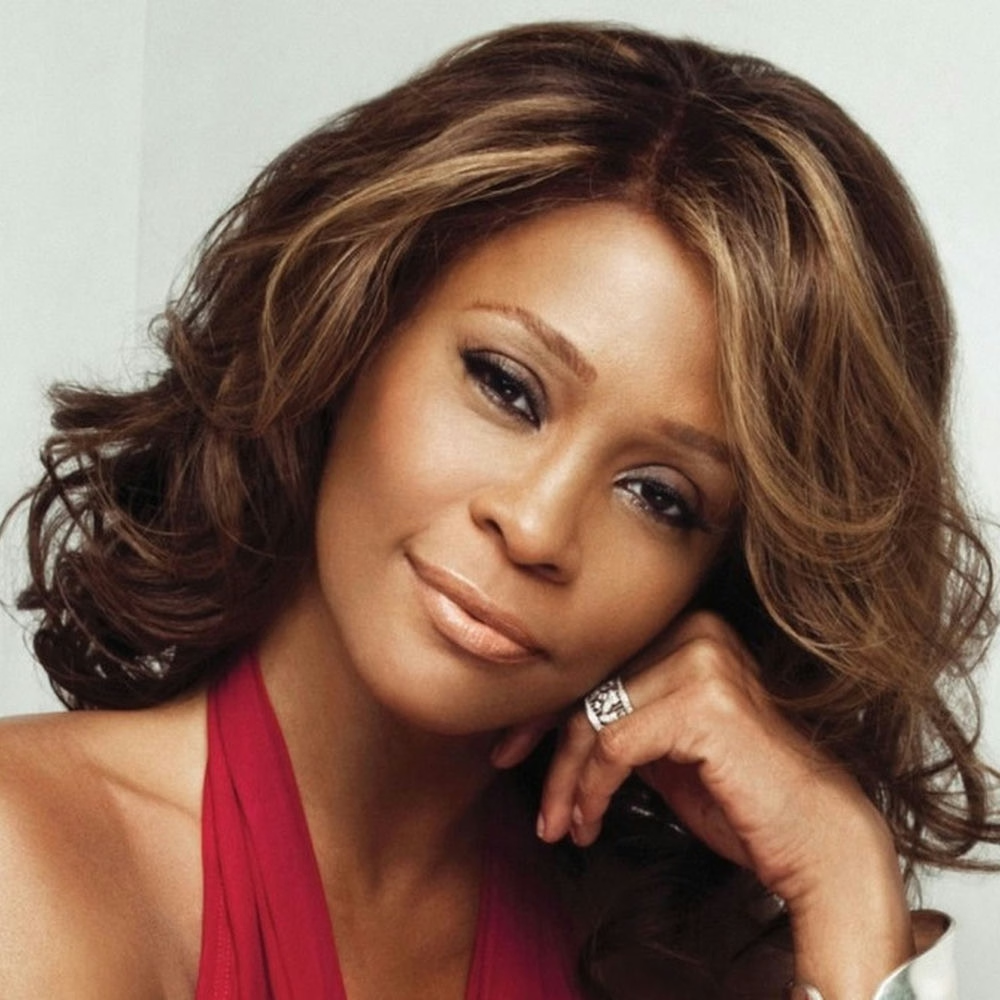
The voice doesn't enter the room. The voice is the room. Whitney Houston walked out of Newark, New Jersey, in 1963 with a gift that had no precedent and no successor -- the kind of instrument that makes every other singer in the building reconsider their own choices.
She was R&B, pop, soul, gospel by inheritance from her mother Cissy Houston and cousin Dionne Warwick, and she carried all of it in that impossibly agile soprano. By the time Clive Davis heard her in a New York nightclub, the machine was already in motion. Nobody had heard anything like that voice before, and nobody has heard anything like it since.
The cost was the control. Whitney had the talent to do anything, but the industry decided what she would be. The ballads, the crossovers, the pristine image -- it was all carefully constructed to make her the biggest star in the world without ever letting her show the full range of what she could do. Gospel audiences felt she abandoned them, R&B audiences felt she was being sanitized for white consumption, and Whitney herself seemed to exist in the contradiction of being both the most powerful vocalist alive and the one who had the least say over her own sound. The sweat was there, but it was hidden behind the polish. The pressure of being the perfect image for everyone else's needs took a toll that the music alone couldn't fix. The higher she climbed, the more alone she became.
"I Will Always Love You 0:30" is the one. That a cappella opening is a dare -- here I am, without the band, without the production, with just this voice that can break stone. The Dolly Parton cover became the biggest-selling single by a female artist in history, and every note of it is Whitney claiming her territory. The body of work surrounding it -- "Greatest Love of All," "How Will I Know," "I Wanna Dance With Somebody" -- showed a versatility that almost no one else could approach.

The voice could be tender, explosive, precise, wild. It was the mothership, the pocket, the crate that held everything pop music had learned about singing. She made everything look effortless, which was the most deceptive thing of all -- the ease was a lie, but the voice was real.
Whitney Houston died in 2012 in Beverly Hills, but the voice didn't die with her. Every singer who opens a mouth to belt a ballad, every contestant on every singing competition, is trying to reach a standard Whitney set and then raised. She was the instrument that defined what a pop vocal could be. The tragedy of her life is that the world demanded so much from her and gave her so little room to be herself, but the voice -- that impossible, transcendent, undeniable voice -- that voice is the one. The crate is still full. The mothership is still calling.
Whitney Houston was profiled in the documentary, Whitney, in 2018, and I Wanna Dance with Somebody, in 2022.